Cranfield to Coordinate Major UK Programme on Aviation’s Non-CO₂ Impacts
- Safer Highways
- 30 minutes ago
- 2 min read

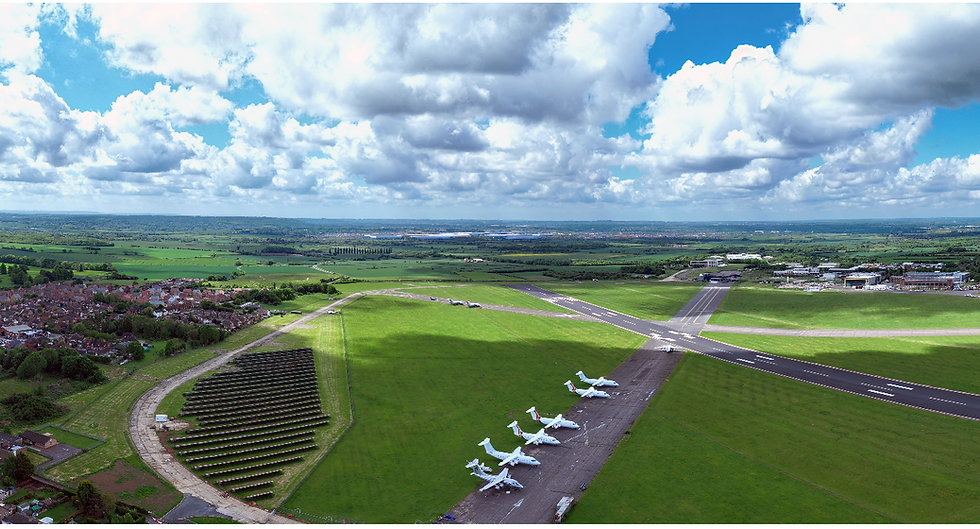
Cranfield University has been chosen to play a central role in a new UK-wide research programme focused on better understanding the climate effects of aviation beyond carbon dioxide emissions.
The university will coordinate the £30M Aviation Non-CO₂ Research Programme, a multi-year initiative supported through the Aerospace Technology Institute and competitions led by the Natural Environment Research Council (NERC). Funding and oversight for the programme are shared between the Department for Transport, the Department for Business and Trade, and UK Research and Innovation.
The programme brings together researchers from academia and industry, including specialists in climate science, aerospace engineering and aviation. Its aim is to expand knowledge of how factors such as contrails and nitrogen oxide emissions contribute to aviation’s overall environmental impact. It will also explore practical ways to reduce these effects in the shorter term, ahead of wider adoption of measures such as new aircraft technologies or sustainable aviation fuels.
As part of its role, Cranfield will act as a coordinating body for the programme. This includes connecting research activities, facilitating collaboration through workshops and meetings, and ensuring findings are brought together effectively to support informed decision-making.
The university’s involvement reflects its established expertise across areas including aeronautics, environmental science and atmospheric research. Its leadership role is intended to help strengthen the UK’s position in advancing more sustainable approaches within aviation.
Professor Neil Harris, Professor of Atmospheric Informatics at Cranfield, will lead the university’s contribution and chair the programme’s advisory group. He noted that the initiative offers an opportunity to bring together partners from across the sector to address an increasingly important area of focus. He added that improving understanding of non-CO₂ impacts could support the development of evidence-based strategies to reduce aviation’s environmental footprint in the near term.


Comments