Government-Funded Study to Assess Autonomous Vehicle Integration at UK Airports
- Safer Highways
- Apr 27
- 2 min read

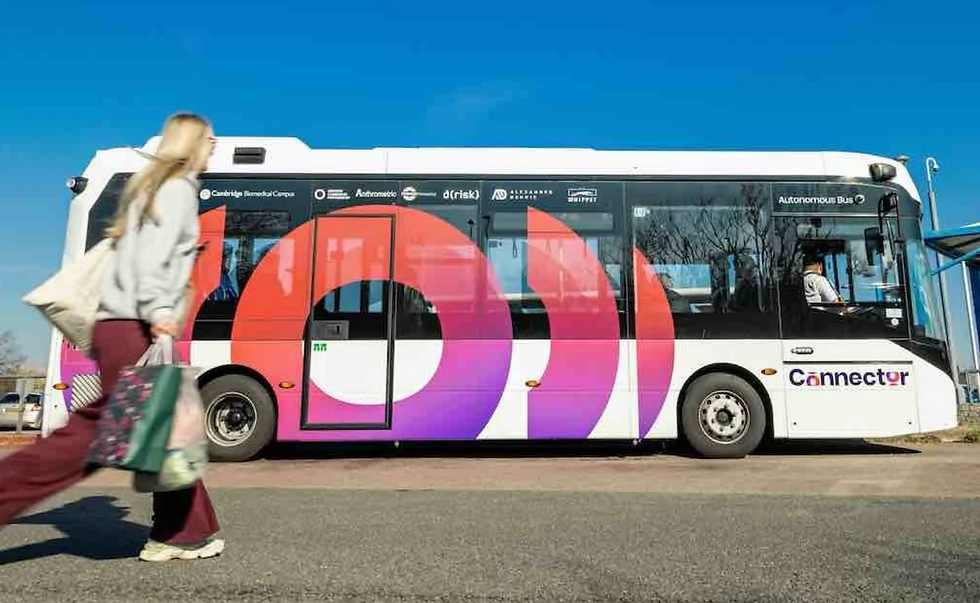
A new government-funded feasibility study will investigate how autonomous vehicle technology could be introduced to improve transport operations within UK airport airside environments.
Airports currently operate a range of separate vehicle fleets—such as cars, minibuses and buses—each with its own dispatch and scheduling systems. This fragmented approach can lead to inefficiencies and added operational complexity. The study will examine whether these systems could be brought together into a more coordinated, integrated model.
The project is being led by autonomous systems developer Fusion Processing as part of the Connected and Automated Mobility (CAM) Pathfinder programme. Its focus will be on assessing the potential role of SAE Level 4 autonomous vehicles, which are capable of operating without a driver in controlled conditions, within airport settings.
The CAM Pathfinder initiative, outlined in the Government’s Advanced Manufacturing Sector Plan, is intended to support growth in the UK’s connected and automated mobility sector. It is being delivered by the Department for Business and Trade in partnership with Innovate UK and Zenzic.
Fusion Processing’s concept centres on managing a mixed fleet through a Remote Operations Control Centre (ROCC). This approach would allow operators to oversee multiple vehicle types from a single location, with real-time monitoring and the ability to intervene remotely if necessary. The system would also incorporate features such as demand-responsive booking, improved fleet utilisation and automated charging.
As part of the study, a range of vehicle types reflecting current airport use will be considered, from smaller units for individual transfers to larger buses for higher-capacity movements. The work will also explore commercial aspects, including potential leasing and financing models alongside technical deployment considerations.
Several UK airports are expected to participate, with additional operators invited to contribute. The project will also involve engagement with the UK Civil Aviation Authority to address regulatory requirements associated with deploying autonomous systems in airside environments.
The study builds on Fusion Processing’s previous experience with autonomous vehicle trials, including bus operations in Cambridge, where it has developed capabilities in areas such as remote supervision and safety management.
Early indications suggest that adopting autonomous systems could bring a range of benefits, including more efficient use of vehicles, reduced staffing pressures and lower maintenance costs. Potential safety improvements will also be examined, particularly in controlled environments where reducing reliance on human drivers may help minimise certain risks.
The outcomes of the study are expected to provide insight into how airports could adopt autonomous transport solutions in the future, supporting efforts to improve operational efficiency and move towards more integrated and sustainable ground operations.



This study sounds like a great step forward for airport efficiency. Speaking of improving focus and recall, I've been playing toon tone to sharpen my color memory—it's surprisingly fun!
geometry dash is a high-energy rhythm platformer that delivers a compact yet intense gaming experience. Developed by RobTop Games, it expands on the popular Geometry Dash universe with a fiery visual theme and challenging gameplay design. The game is built for players who enjoy fast reflexes, precise timing, and a constant sense of movement and pressure.
Hollow Knight is a rich adventure game set in a mysterious underground kingdom. Players guide a small knight through dangerous environments filled with enemies and secrets. The gameplay combines exploration, platforming, and challenging combat. Each new ability unlocks new paths and opportunities. The world is detailed and encourages players to explore every corner. The music and art style create a memorable atmosphere. Hollow Knight provides a deep and engaging experience for players who enjoy discovery and skill-based challenges.