London bus electrification target ‘next to impossible’ without extra support, says First Bus executive
- Safer Highways
- Jan 4
- 2 min read

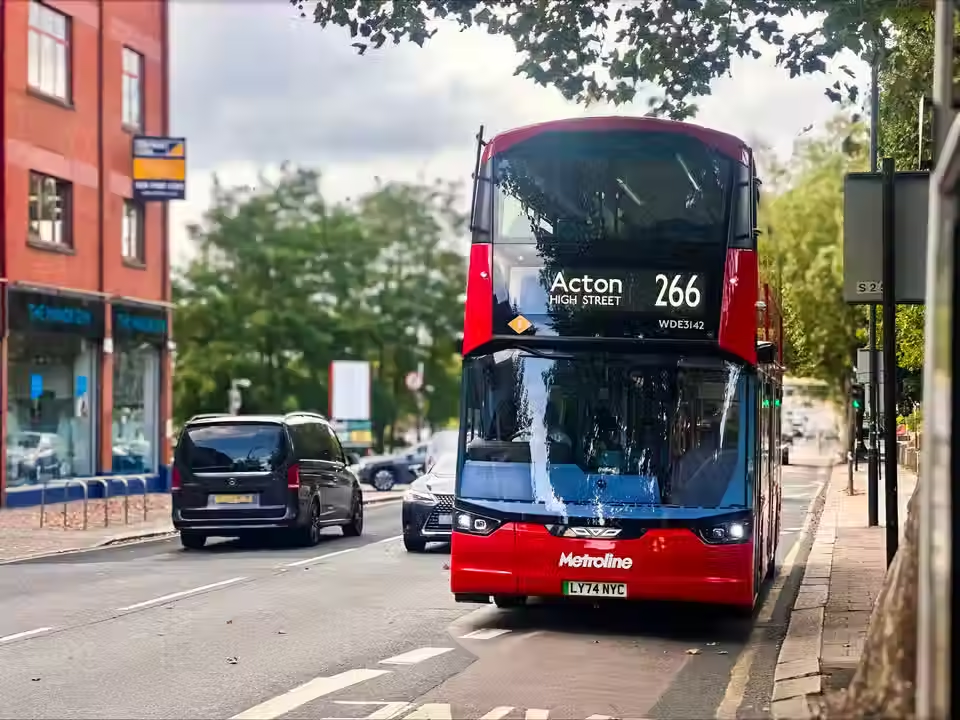
Sir Sadiq Khan’s ambition to make the entire London bus fleet zero-emission by 2030 faces significant challenges, according to Bill Cahill, managing director of First Bus London.
While the company is committed to the goal, Cahill warns that achieving it involves more than simply purchasing electric buses.
Currently, just over 2,600 of London’s 9,000 buses are zero-emission—around 30%. Transport for London (TfL) estimates that, without government funding, it may take until 2034 to convert the whole fleet. Electric buses have recently been rolled out on routes including 98, 268, 270, 277, and 341.
Cahill highlights that electrifying bus depots is a major hurdle. “It’s not just about buying buses,” he said. “You don’t plug an electric bus into a standard socket. These high-voltage systems require years of planning, and power capacity in the London Grid is limited. Depots need significant upgrades, and that’s creating a barrier for new operators.”
First Bus aims to electrify nine out of ten of its London depots by 2030, with Park Royal excluded due to power supply constraints and the nearby HS2 Old Oak Common station. The company is already converting Westbourne Park garage and plans to electrify Stamford Brook garage—London’s oldest surviving bus garage—over the next one to two years. Stamford Brook, which dates back to 1896, currently operates only four non-electric routes (220, 272, 440, and E3) and runs at around half capacity.
Cahill hinted that Stamford Brook could see “something different to anything elsewhere,” though details remain confidential.
The pace of electrification also depends on which routes First Bus is contracted to operate by TfL. The company recently won the contract for route 18, London’s busiest bus route, which currently uses diesel hybrids. First Bus has purchased 60 new BYD electric buses, capable of up to 500 miles between charges, enough for two to three days of operation. Forty will be deployed on route 18, with the remainder on route 31.
First Bus’s London fleet now includes around 420 electric buses, with about 400 diesel hybrids and fewer than 200 “light diesel” vehicles remaining. BYD double-deckers cost approximately £430,000 each, compared with about £500,000 for UK-built electric models from Wrightbus or Alexander Dennis. Rival operator Metroline has expanded its zero-emission fleet to 422 buses.
Cahill also cited falling bus passenger numbers as a challenge for TfL and operators. Contributing factors include slower traffic speeds due to delivery vehicles, road space allocated to cyclists and pedestrians, and changes in post-pandemic travel patterns, such as more people working from home. He also suggested that uncounted passengers, including those entitled to free travel, mean actual patronage may be higher than reported.
Average daytime bus speeds in London have fallen below 9mph, according to Cahill, who believes TfL figures overestimate speeds because they calculate averages over 24 hours rather than during peak times. “If disruption slows buses to the point where it takes an hour to travel a mile, people stop using them,” he said. “The product is improving, but we need to find ways to speed it up. Giving road space to other users inherently slows the bus network.”


Hey everyone! I first heard about this game hall from a guy I play online chess with. During a random chat, he mentioned how he relaxes after work. Later that night I opened https://slotscity.ua/ru/game-hall right in the middle of my browsing session. What caught my attention was how easy it was to move between different games without feeling lost. I tried a few options just out of curiosity and ended up staying longer than planned. I closed the page feeling calm and oddly satisfied.