Passenger Group Backs £60m Electric Bus Depot Plans for Wakefield
- Safer Highways
- 2 hours ago
- 2 min read

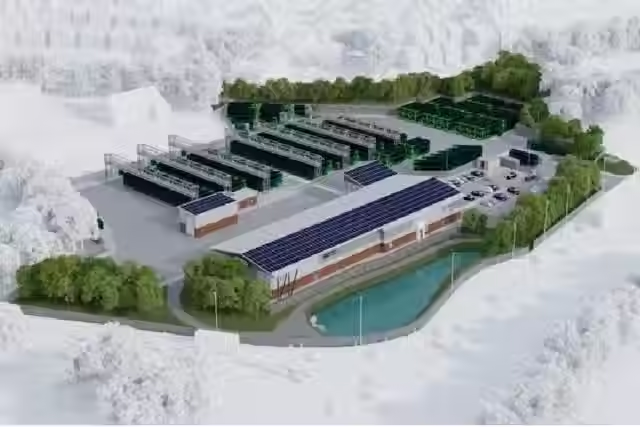
Plans for a new £60m zero-emission bus depot in Wakefield have been welcomed by a local passenger advocacy group, highlighting its potential to improve public transport across the region.
The West Yorkshire Combined Authority (WYCA) has submitted proposals for a purpose-built facility as part of its wider ambition to modernise and decarbonise the area’s transport network. The development would include space for up to 125 buses, along with charging infrastructure to support a fully electric fleet.
The scheme also features a two-storey building housing offices and maintenance facilities, as well as a separate area for bus cleaning. Additional elements include staff parking, secure cycle storage and landscaping.
Better Buses for West Yorkshire, a campaign group advocating for publicly controlled bus services, has expressed strong support for the project. Campaign representative Gareth Forest said the depot would play a crucial role in delivering more reliable and frequent services, while also supporting the transition to a greener transport system.
The proposed site is at Newton Bar, on land formerly used as a council transport depot. Existing buildings would be cleared to make way for the new facility, subject to planning approval. Construction could begin as early as summer this year, with the depot expected to be operational by 2028.
Wakefield has been without a central depot since 2024, when Arriva closed its Barnsley Road site due to structural issues. The closure left a significant gap in local transport infrastructure.
WYCA says the project aligns with its long-term transport strategy, which aims to create a more sustainable, reliable and accessible network, while reducing reliance on private cars. The plans also support broader regional goals to cut emissions, improve air quality and move towards a net-zero carbon economy by 2038.
In addition to environmental benefits, the development is expected to generate employment during both the construction phase and ongoing operations, contributing to the local economy.


Comments